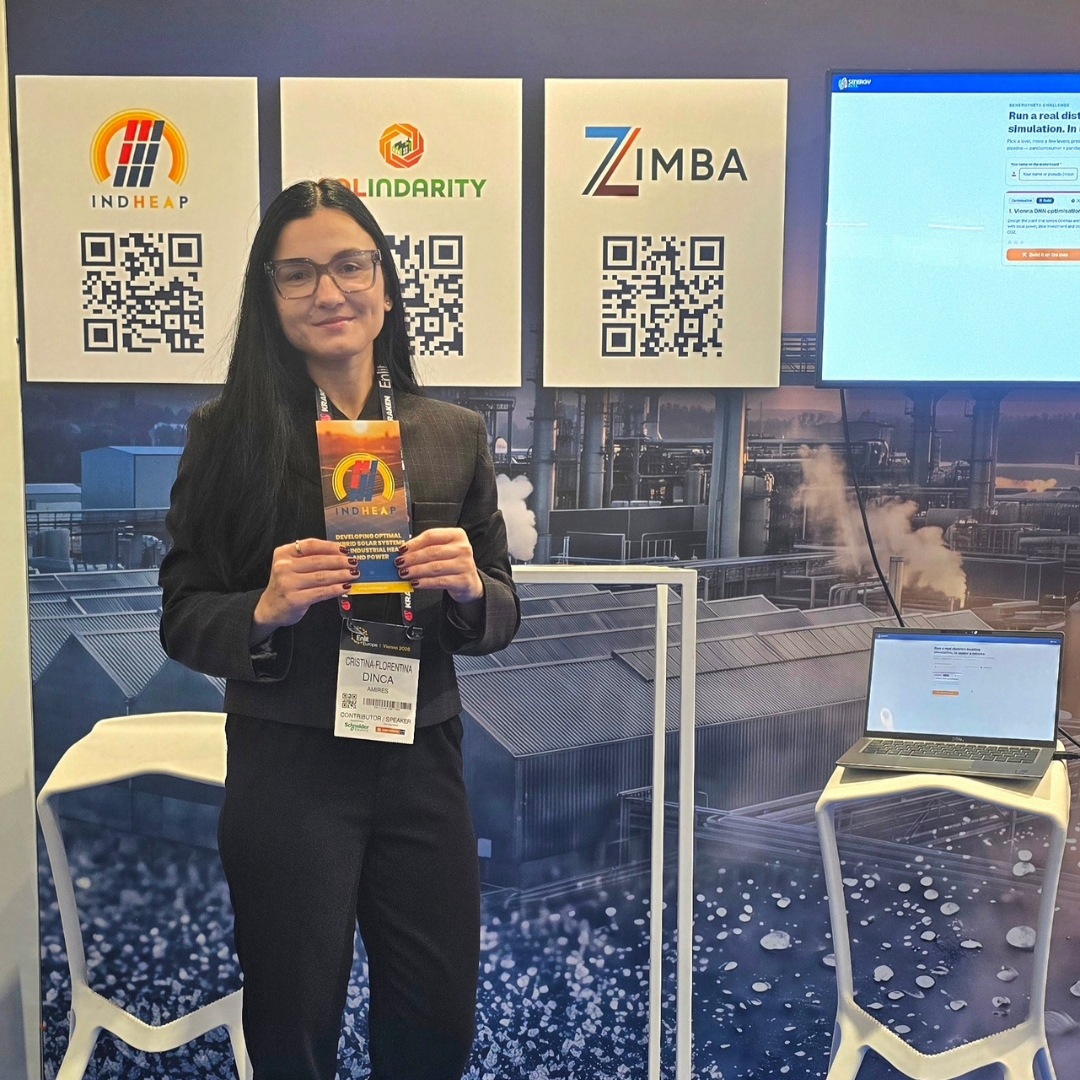
INDHEAP Brings Solar Innovation to Enlit
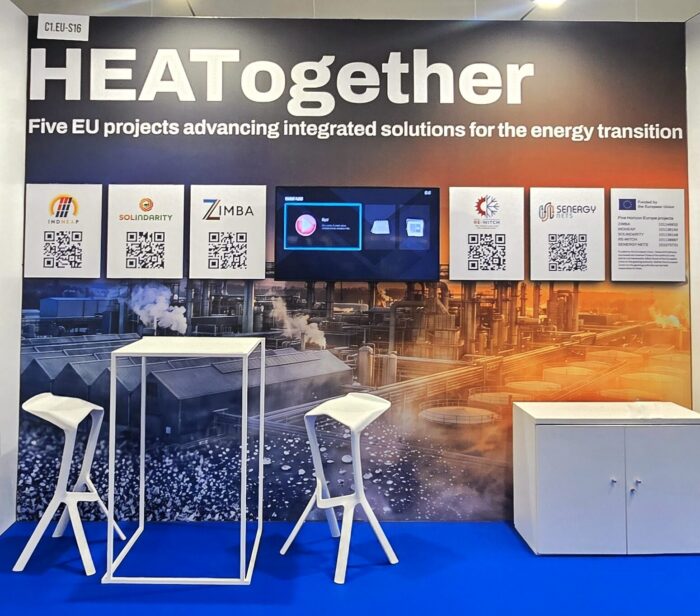
November 19, 2026From 10 to 12 November, INDHEAP participated in Enlit Europe 2026 in Vienna as part of HEATogether, a cluster of five EU-funded projects presenting complementary solutions for cleaner industrial energy systems.
INDHEAP joined ZIMBA, SOLINDARITY, RE-WITCH and SENERGY NETS at a shared stand in the EU Projects Zone, creating a common space for discussions about renewable heat, waste-heat recovery, thermal storage, industrial cooling and integrated energy networks.
From solar availability to reliable industrial energy
A central question guided INDHEAP’s participation at Enlit Europe: how can solar energy become a reliable part of industrial production?
Industrial facilities often require heat and electricity continuously, while solar availability changes throughout the day and across seasons. Increasing the role of solar energy in industry therefore requires more than installing solar collectors or photovoltaic panels. Generation, storage, electrification and industrial demand must be designed and managed as part of one integrated system.
INDHEAP is addressing this challenge by combining solar thermal and photovoltaic technologies with electrically boosted thermal energy storage, known as e-TES. The project is developing a flexible system to supply renewable heat and power to industrial processes operating at temperatures of up to 250°C.
At the HEATogether stand, visitors had the opportunity to discover this integrated approach and exchange views on the conditions needed to bring hybrid solar systems into real industrial environments.
INDHEAP at the HEATogether session
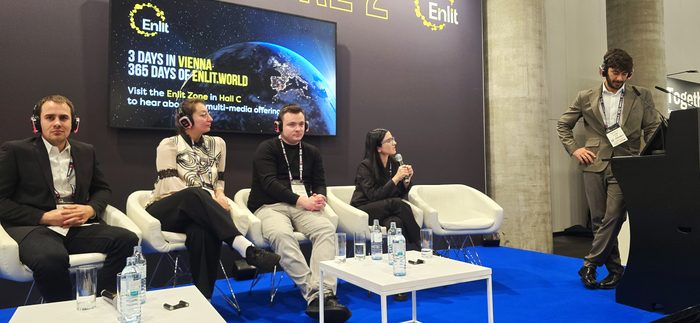
INDHEAP was also presented during the session “HEATogether: Connecting Clean Heat, Cooling and Power,” held on 10 November at the EU Projects Zone Hub 2.
Cristina-Florentina Dinca, INDHEAP’s Dissemination Manager, presented the project’s approach to bringing solar heat, power and flexible thermal storage together around the needs of industrial processes.
Her contribution highlighted that renewable-energy production is only one part of the solution. The wider challenge lies in selecting, sizing and controlling different technologies so that they respond reliably to industrial heat and electricity requirements.
The discussion connected INDHEAP’s work with complementary approaches across:
- waste-heat recovery and temperature upgrading;
- high-temperature heat pumps;
- thermally driven industrial cooling;
- thermal energy storage;
- sector coupling and multi-energy networks.
By placing these solutions side by side, the session showed why industrial decarbonisation cannot depend on one technology alone. Progress will increasingly rely on combinations of technologies that respond to local resources, process requirements and wider energy-system conditions.
Insights from Enlit Europe 2026
This year’s Enlit Europe focused on integration, resilience and competitiveness, themes that closely reflect the challenges addressed by INDHEAP.
Conversations throughout the event reinforced the importance of connecting renewable-energy technologies with industrial operations rather than considering them as standalone installations. For solar solutions, this means accounting for production schedules, temperature requirements, available space, changing energy prices and the timing of heat and power demand.
Another recurring topic was the pathway from innovation to deployment. Technical performance remains essential, but industrial uptake also depends on investment requirements, operational reliability, integration costs and a clear business case for end users.
These considerations are central to INDHEAP. Alongside the development of its hybrid energy system, the project uses modelling and optimisation tools to examine different combinations of solar thermal energy, photovoltaics, thermal storage and electrification. This helps identify configurations that respond to the technical, economic and environmental conditions of individual industrial sites.
Connecting INDHEAP with complementary projects
The shared HEATogether presence provided an opportunity to place INDHEAP within a broader industrial and energy-system perspective.
While INDHEAP focuses on hybrid solar systems for industrial heat and power:
- ZIMBA develops technology to upgrade low-grade industrial waste heat;
- SOLINDARITY integrates solar energy, high-temperature heat pumps, storage and waste-heat recovery;
- RE-WITCH develops renewable and waste-heat-driven technologies for industrial heating and cooling;
- SENERGY NETS connects heating, cooling, electricity and gas through sector coupling, flexibility and multi-energy networks.
This combination helped demonstrate how renewable generation, recovered energy, storage and network integration can contribute to a more coherent pathway for industrial decarbonisation.
Moving integrated solar solutions forward
Participation in Enlit Europe gave INDHEAP an opportunity to present its work to energy professionals, technology providers, researchers and representatives of other EU-funded initiatives.
The questions and discussions in Vienna also underlined the importance of designing solar solutions around the realities of industrial operation. As INDHEAP advances its demonstration and replication activities, these exchanges can help strengthen the connection between technical development and the requirements of potential industrial users.
Thank you to everyone who visited the HEATogether stand, attended the cluster session and contributed to the conversation about the future of industrial heat and power.
Follow INDHEAP on LinkedIn for further project updates.