INDHEAP Research Presented at ESCAPE 36
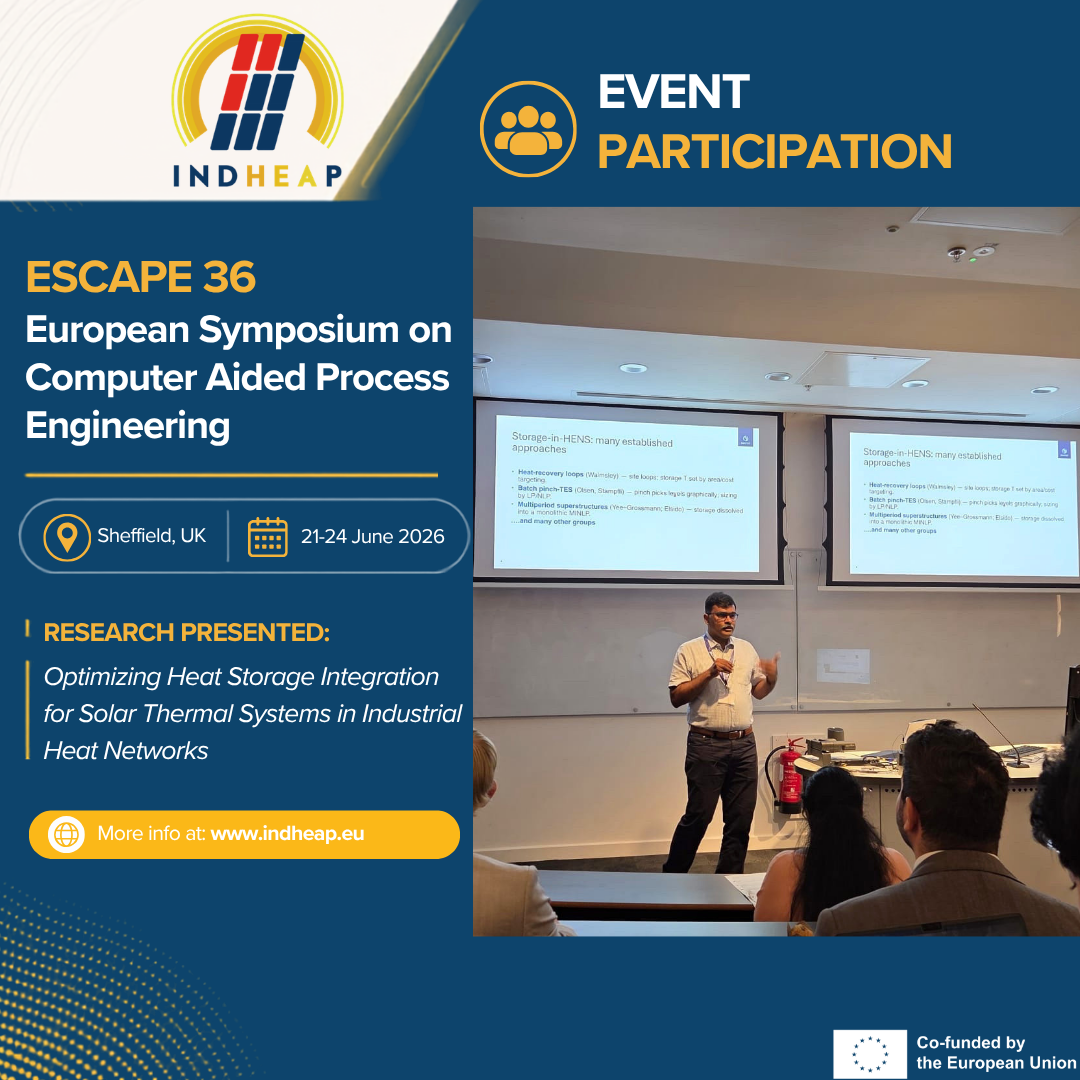
September 16, 2026The INDHEAP project was represented at ESCAPE 36 – European Symposium on Computer Aided Process Engineering, held in Sheffield, United Kingdom, from 21-24 June 2026. Our project partner SINTEF presented the paper “Optimizing Heat Storage Integration for Solar Thermal Systems in Industrial Process Heat Networks.”
The research addresses an important challenge in industrial decarbonisation: how to maximize the use of solar thermal energy within complex industrial heat networks. To support this objective, the work introduces an optimization framework for integrating heat storage with solar thermal systems in multiperiod heat exchanger networks.
By combining heat storage optimization with pinch point analysis, the framework identifies when and where heat can be most effectively stored and recovered within industrial processes. This analytical approach makes it possible to evaluate different storage configurations and their impact on the utilization of solar thermal energy.
The methodology was validated using operational data from the INDHEAP lubricant plant case study. The results showed that larger thermal storage capacities enable greater utilization of available solar heat. However, the analysis also revealed diminishing returns, with the additional benefits becoming smaller as storage size increases. These findings provide valuable guidance for designing thermal storage solutions that balance performance and practicality in industrial applications.
The research contributes to the development of more effective strategies for integrating renewable heat sources into industrial process heat networks, supporting the transition towards more sustainable and energy-efficient industrial operations.
INDHEAP was pleased to share these results with the international process engineering community at ESCAPE 36 and looks forward to further exchanges with researchers and industry stakeholders working to advance renewable heat integration for industry.
Interested in learning more about the methodology and results?
Read the full paper here.